
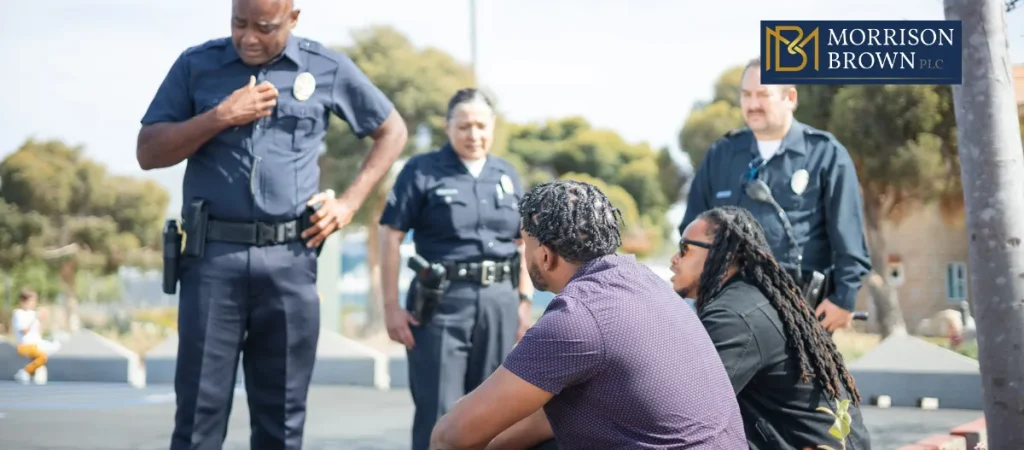
When a police officer asks to speak with someone, that person’s first instinct may be to cooperate and explain themselves. After all, answering questions seems like a way to help correct a misunderstanding or show that they’re not hiding anything. Others may hesitate, though, asking themselves: Should you talk to the police without a lawyer in Virginia?
It’s often the case that speaking with law enforcement without legal representation can create risks that may affect a future criminal case. Virginians in this situation can speak with a Virginia criminal defense attorney at Morrison Brown PLC. Our attorneys at this firm can help you understand your legal rights, the potential consequences of what you say, and challenge evidence wrongfully obtained in conversations with police, if necessary.
Why Police Want to Talk to You
While officers have an important role in enforcing Virginia’s criminal laws, their objective is to collect information that can be used during an investigation. Sometimes they contact individuals as witnesses. In other situations, officers may already suspect a person was involved in criminal activity but haven’t yet made an arrest.
Even statements that seem harmless can become evidence later. A misunderstanding, inaccurate recollection, or poorly worded response may be interpreted differently than you intended. Once you make a statement, it can be difficult to explain it away later. This concern can arise in investigations involving DWI, property crime, or domestic violence.
The Risks of Speaking Without Legal Representation
Many people think that only guilty individuals need attorneys. In reality, anyone questioned by law enforcement can benefit from having an attorney look after their rights before answering questions.
When you speak to police without a lawyer present, you may:
- Accidentally give information that can be used against you
- Make inconsistent statements that create suspicion
- Misunderstand the purpose of the interview
- Waive important legal protections
A person who believes they’re helping themselves may unknowingly strengthen the prosecution’s position. Consider that in some cases, people have confessed to crimes they didn’t even commit, which led to wrongful convictions. This is one of the main reasons why defense lawyers often advise individuals to use caution before speaking with investigators.
Can the Right to Remain Silent Be Used Against You?
The United States Constitution includes protections against self-incrimination. In many circumstances, individuals have the right to remain silent and avoid answering questions that could expose them to criminal liability.
Exercising this right and requesting an attorney doesn’t automatically mean you are guilty or make you look suspicious. Doing so just means you’re choosing to protect yourself until you understand the situation and receive legal advice. This protection is important in cases involving drug crime, sex crime, or violent crime allegations.
Hire a Trusted Criminal Defense Lawyer Before Speaking With Police
The strongest legal protection often begins before formal charges are filed. Hire a criminal defense lawyer to help do the following:
- Communicate with investigators on your behalf
- Assess potential risks
- Help clarify misunderstandings before they develop into a more serious criminal case
Consider getting counsel from a legal team that consists of professionals who’ve practiced law on both sides of the courtroom to keep your constitutional rights from being violated.
Morrison Brown PLC co-founder Matthew Morrison previously served as an Assistant Commonwealth’s Attorney and has a background that includes military law enforcement, prosecution, and criminal defense experience. Co-founder Jeanne Brown previously served as a Fairfax County Deputy Public Defender and has handled complex, serious, and high-profile legal matters that involved adults and children in Virginia.
At this veteran- and woman-owned office, the team is proud to have also taken care of cases in support of first responders and military members, as well as those facing mental health challenges that could be important factors in the circumstances of a case. Together, these professionals use their balanced, wide-ranging perspective of the legal system to provide insight into how investigations often develop before a criminal case reaches court. Their legal experience also extends to matters involving assault, gun crime, gun rights restoration, and expungement.
FAQs
Do I Have to Go if I’m Asked to Come to a Manassas Police Station for Questioning?
No, you don’t have to go if you’re asked to come to a Manassas Police Station for questioning. When officers from the Manassas Police Department at 9608 Grant Avenue or the Prince William County Police Department ask you to come in for questioning, but they don’t have a proper arrest warrant, subpoena, or judge’s order, then it’s a voluntary request.
What Should I Do if a Detective Leaves Me a Voicemail?
If a detective leaves you a voicemail or email or tries to contact you through another person, you should avoid rushing to return the call and discuss the matter. Instead, you should speak with a Virginia criminal defense attorney who can evaluate the situation and help you determine an appropriate response.
Do I Have to Roll My Window Down for Police in Virginia?
Virginia law doesn’t explicitly say that you have to roll your window down for police. But you should open your window enough to communicate and hand over any required documents, like your driver’s license and registration. Refusing to lower it enough to exchange information could create additional issues during the stop. If questions come up about your rights, you should consult an attorney.
Are Cops Allowed to Tell You to Stop Recording?
Whether cops are allowed to tell you to stop recording depends on the circumstances. You have a constitutional right under the First Amendment to record police officers carrying out their duties in public spaces. But officers can tell you to stop if your recording actively interferes with their operations, crosses an established crime scene boundary, or poses an immediate threat or safety hazard.
Protect Yourself During Police Encounters With a Lawyer’s Help Today
Instead of talking to the police without a lawyer in Virginia, the safer approach in most situations is to obtain legal guidance and understand your rights before answering questions. Even innocent statements can have unintended consequences when viewed through the lens of a criminal investigation. An attorney can also provide guidance in cases involving drug possession, drug manufacturing, sexual assault, traffic violation defense, robbery, or murder.
If law enforcement has contacted you or you believe you may be involved in a criminal case, you should speak with a Virginia criminal defense attorney as soon as possible, an important step toward protecting your interests. The attorneys at Morrison Brown PLC can clear up any questions you have about responding to law enforcement inquiries. Contact our office today.